Stake Crash Strategy — Cash-Out Discipline, Not Magic
Let's be clear from the first line: no Stake Crash strategy guarantees profit, and anything sold as a "winning system" is fiction. What a good approach can do is control how fast you lose, protect your bankroll, and keep the game fun. That's what this page is about.
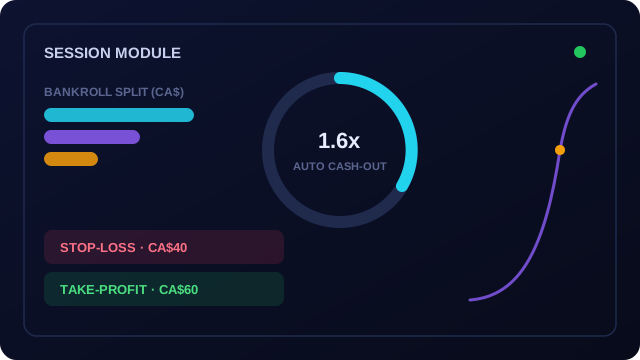
Every Crash round is independent and the crash point is uncertain. Strategy can't change the odds — it changes your behaviour. Bet sizing, a cash-out target you commit to, and hard session limits are the levers you actually control.
Why no strategy guarantees profit
Rounds are independent
The result of the last round tells you nothing about the next. A string of low crashes doesn't make a big one "due."
The house edge is built in
Over enough rounds, the maths favours the house. Rakeback softens the cost a little; it doesn't flip the edge.
Variance cuts both ways
Short winning streaks feel like skill. They're variance — and the same variance produces the losing streaks.
Auto cash-out vs manual cash-out
Auto Set it, trust it
- Pick a target multiplier before the round
- The game exits for you — no hesitation
- Enforces the plan when your nerve wobbles
- May leave a bigger run on the table
Manual Your finger, your risk
- Full control to react in the moment
- Reaction lag can cost you the round
- Tempting to hold "one more tick"
- Best paired with a firm personal rule
For most players building discipline, a committed auto cash-out target is the safer default. The how-to-play guide shows exactly where to set it.
The low-multiplier approach
Targeting something modest — around 1.3x to 1.7x — means rounds land in your favour more often. The trade-off is small returns and the reality that a run of early crashes can still chip away steadily. It feels safer, but it isn't risk-free, and chasing losses after a bad run is where "safe" plans fall apart.
The high-multiplier risk
Holding for 5x, 10x or beyond can pay big on a single round, but most rounds crash long before that. Bankrolls drain fast here, and the emotional swings are sharp. If you play this way at all, do it with money you've already written off and a strict cap on how many attempts you'll make.
Sizing bets against a bankroll
Illustrative only. A common guardrail is keeping each bet to a small slice of your session bankroll so no single round can wreck it.
| Session bankroll | ~1% unit | ~2% unit | Rounds before 50% down* |
|---|---|---|---|
| CA$50 | CA$0.50 | CA$1.00 | Many small rounds |
| CA$100 | CA$1.00 | CA$2.00 | Many small rounds |
| CA$250 | CA$2.50 | CA$5.00 | Many small rounds |
*Deliberately vague — actual results swing widely with variance. Smaller units mean slower swings, not guaranteed survival.
Session limits and stop-loss rules
Set a time cap
Decide how long you'll play before you open the game. Fast rounds eat time and money quickly.
Stop-loss
Pick a CA$ amount you're willing to lose. Hit it, close the game. No "just one more."
Take-profit
If you're up, bank some of it. Walking away ahead is a skill most players never practise.
Mistakes that drain bankrolls
◆ Responsible Crash play
Strategy and responsibility are the same conversation. Before you play:
- Set deposit, loss and time limits — and use the platform's own tools to lock them in.
- Only ever stake money you can comfortably lose. Crash games carry real risk.
- You must meet the legal gambling age in your province or territory.
- If the game stops feeling like entertainment, take a break. Canadian support lines and the Responsible Gambling Council can help.
New to the game entirely? Start with Stake Crash for Canadians or the beginner guide. Curious about the code? See the GETRAKEBACK promo page, and browse the wider Stake Originals line-up.
Strategy questions
No. Because each round is independent and the crash point is uncertain, no strategy can guarantee profit. Sound strategy manages risk and pace — it doesn't beat the maths.
Lower targets land more often, so swings are gentler — but they still lose when a round crashes below your number. "Safer" means lower variance, not risk-free.
No. Previous results don't influence the next round. Believing a big multiplier is "due" after small ones is the gambler's fallacy. We cover it on the predictor page.
There's no correct number, but keeping each bet to a small percentage of your session bankroll slows down swings. The CA$ examples above are illustrations, not recommendations.
Set a stop-loss before you start and treat it as non-negotiable. When you hit it, close the game. Pre-commitment beats willpower once a session is underway.